
Master Forex - V courses - the best for forex education |
3 forex books about technical analysis - Sensational Findings | ||||||||
| |||||||||
|
Book 1 - Forex Market
Secrets From Professional Trader Book 3 - Points of opening and closing of dealings (Trading Course) Masterforex-V Academy Masterforex-V Trading Academy Forum Masterforex-V Trading Academy Library Masterforex-V in USA and Canada Indicators To Trade FOREX And FOREX Trading Systems Assessment Forex Market Markets and Broker Companies Board of Honour of Masterforex-V Academy (Winners of Competiteons) Masterforex-V Books In Russian
|
Part2. Masterforex-V's trading system and new
technical analysis.
|
||||||||
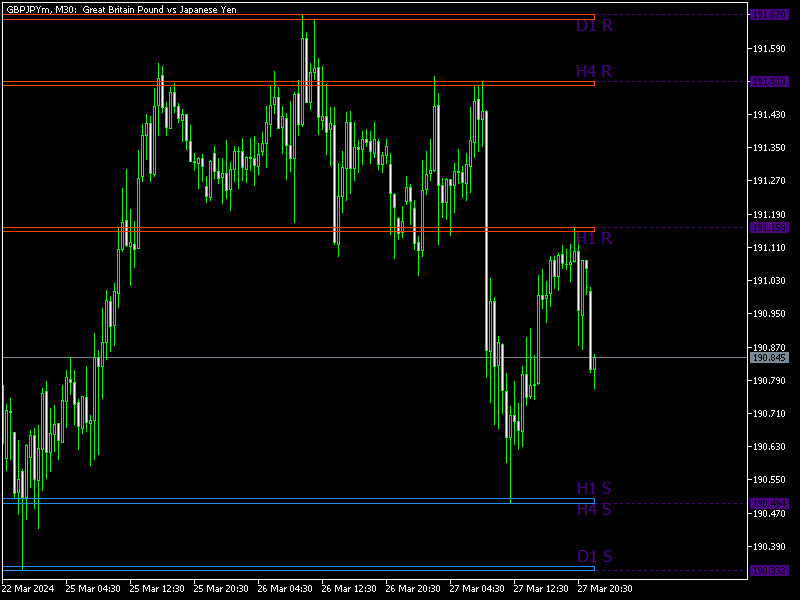
| What are support/resistance levels? Support and resistance levels are one of the main elements of Forex TA, according to the axioms of which: 1. The following levels are always situated next to (away from) the current price: · Resistance – above the current price · Support –below the current price 2. When any such level is broken through it means that the price strives to reach the next level 3. If the level is not broken through (or it is a false breakout) then the price kicks back from the level in the opposite direction (from the support to the resistance and vice versa). Therefore, by knowing the S/R levels of a true/false breakout a trader can open positions without mistakes, working from one S/R level to the next one. This is a picture representation of the thesis: Pic1. A flat before European session, the tech levels are above/below · The breakout of resistance 1 – the price moves towards resistance 2 ( a “short bullish wave” by MF) · The breakout of one level, followed by the breakout of the opposite border of the ISF by MF – is a “strong signal” – the price moves towards support 3-5 Pic.2. The bullish movement under consideration turned out to be… an a-b-c correction on the senior TF. Does it look simple? Yes, it does… at first sight. But if we take into account the fact that over 97% of traders lose their deposits at Forex then logical questions arise: 1. How can millions of traders around the world be confused by this simple (at first sight) regularity? 2. How to calculate the right S/R levels, pushing away from which the price LOGICALLY starts a rapid movement? Where these levels can be taken? 3. What criteria are used to tell a true breakout from a false one? The following conclusion can be made: without giving clear answers to these 3 simple questions no trader will ever be able to make profit at Forex. The difficulties of defining the S/R levels The main difficulties consist in the following: 1. There is no generally accepted way in the world to define the S/R levels 2. Each classic gives his own way to do it…which have no connection with other methods 3. The world's analysts make traders get used to “the black box” – giving S/R levels without explaining their nature (i.e. the techniques of their calculation ) An example. The Alpari DC defined the following levels on 12.05.2006 · EUR/USD 1,2720 1,2475 1,29 1,3160 · GBP/USD 1,90 1,9150 1,8540 1,8130 This is one of the facts of applying the “black box” method, which in 99% of cases means that… that the authors of these levels are either amateurs or scammers, as there is no answer to the main questions: WHOSE technique/method was applied to calculate these tech levels? HOW do these levels help anybody to trade successfully at Forex? The conclusion is the following: They have no value for real trading and they mean nothing. How the classics define S/R levels All the classics of trading have their own method of defining Support/Resistance levels The details are given in book 2 http://www.masterforex-v.org/book2.htm · The common and the specific in the horizontal tech levels of support and resistance in the works by Alexander Elder, John Murphy, Demark, Borselino, Naiman, LeFevre, Shwager etc. http://www.masterforex-v.org/002_001.htm · The techniques of building sloping S/R levels within channels in the works by Murphy, Demark, Shwager, Tom Hartley, Luka. Naiman, Victor Borishpoltz. http://www.masterforex-v.org/002_005.htm · Dow Jones agency's Pivot Points as S/R levels – daily tips for novice traders http://www.masterforex-v.org/002_003.htm · The difference between a false and a true breakout of a tech level with the TA classics – Elder, Demark, Shwager, Borselino, Luka, Konnors, Rashki, Chand, Kats, McCormic, Naiman. http://www.masterforex-v.org/002_002.htm Masterforex-V's basic conclusions about the classic methods of building tech levels 1. Subjectivity – up to the phrases like: · Support/resistance levels are “horizontal or almost (??) horizontal lines” (ELDER) · Which usually (??) coincide with the preceding peaks (Murphy) · Which are drawn near (??) the preceding minimums and maximums (Shwager)
2. Making use of different techniques: · Horizontal levels (Elder, Shwager, Murphy , Bill Williams, Larry Williams, Boeselino) · Sloping channels (Demark, Hartley, Barizhpoltz, Luka, Naiman) · Pivot Points (Dow Jones) · The peak of the preceding pullback on m15 (Larry Williams) · Moving Averages (Bollinger) · Volumes (Murphy, Shwager) · The number of “touching” the level (Elder) · 1-4% away from the current price (Shwager) · The “round-off numbers” method of defining S/R levels (Edwin LeFevre)
3. Each classic (especially broker) has his OWN level of support/resistance, which is different from others. · What true/false breakout of WHAT S/R level can we talk about if the levels are DIFFERENT? · If we apply to the chart all the S/R levels offered by the classics and DC analysts then all the chart will be covered with S/R levels. · Jack Shwager in his book “Technical analysis. Comprehensive course” asks the following question: “TA charts: a prognostication tool or folk art?”
4. According to the data of testing dozens of these techniques of defining S/R levels, Jeffry Owen Katz and Donna McCormic in their book “Encyclopedia of trading strategies” give convincing proofs that applying the classics' trading systems, which are based on breaking through S/R levels (the way they are given in the classics' books), is more likely to end up in losing the deal than in winning it , with the probability of winning being equal 30% to 60% for each classic technique. I hope you understand why 97% of traders in the world lose at Forex. They thoughtlessly use somebody's techniques of defining S/R levels, which work only in 30-60% of cases. How can one correct the mistakes and optimize each of the techniques? To find this out do the following: 1. Visit the Department of the Higher School of MF-V Academy (the closed forum) - http://forum.masterforex-v.org/ 2. Read the materials published in the “Market leader” magazine fro traders, where the Academy training materials are partially explained. · Murphy – “The secrets of trading volumes or what J. Murphy is never going to tell” http://www.profi-forex.org/read.php?id=5 · Bill Williams - “When and where the Alligator by B. Williams is definitely going to deceive traders” http://www.profi-forex.org/read.php?id=4 · Elliot - “Majestic Elliot and the new NON-Elliot wave theory” http://www.profi-forex.org/archive.php?page=2 · Harold Hartley – “The secrets and mysteries of the world-famous traders and their trading systems. The classics of Forex patterns. Harold Hartley. ” http://www.profi-forex.org/read.php?id=3 · Larry Williams – “The sensational solution to the riddle of Larry Williams and Steve Breeze's COT” http://www.profi-forex.org/read.php?id=1 · The newest S/R levels – VSA (Volume Spread Analysis) – the newest indicator and TS. http://www.profi-forex.org/read.php?id=5 · “Psychopath” levels (the new in TA) http://www.profi-forex.org/read.php?id=3 Support/resistance levels in Masterforex-V TS The main difference of the MF-V's method of defining S/R levels is BASED on the new notion of the trend defined by MF (the notion itself http://www.masterforex-v.org/002_000_01.htm) 1. Define the direction of the trend and its MF wave level. For example: A bullish trend on MN through a w1 FZR had different support levels on its way, breaking through which the bearish trend continued unfolding. This is the analysis of the situation from the viewpoint of junior TFs 2. Support/resistance levels, under Masterforex-V, are the tools that can stop the price at a specific tech level. · Defensive volumes of the exchange market · Traders' defensive stop and limit orders (placed by “the preys of the market”) (If Oanda's buy limit orders are caught then the Founder of the Game must move the price till the stop-loss orders are active). · Options · MF pivots · Sloping channels by MF · Fibonacci targets and the impulse/correction levels of senior TFs · The work-off of the inner waves and sub-waves of the given TF · Allies' reversal
3. It is necessary to clearly distinguish the levels of each of the 12 MF wave levels. · The tech level of a bigger type of trends is senior (more important) to a smaller one. · The S/R levels of a smaller trend are more precise than the levels of a bigger trend. · The synthesis of 2 TFs/wave levels is shown above (the smaller TF is a part and the decoding/clarification of the bigger one) · The analysis of the movement on even smaller TFs is shown below (up to m1-m15) Look at the short-term combinations for working off a correctional wave Neither the TA “classics” nor modern “analysts” have ever studied or examined this issue. Masterforex-V is the first one to deal with the problem in his new TA and TS. 4. The methods of defining each S/R level of all the 12 MF wave levels must be clearly classified (systematized). · Hundreds of traders of the Academy define the same S/R levels every day for several TFs and trends with a 1(2)-point difference (because of the difference in the quotes the DCs provide them with) · This technique of defining S/R levels has never been examined and studied (as well) by the TA classics in their books.
5. It is necessary to take into account the S/R levels of at least several (NOT one) currency pairs, allies, futures, indexes. For example, the Association of traders from the Republic of Belarus under Masterforex-V Academy managed to define and prompt the reversal of BYR (the Belarusian ruble)/USD on December 1, 2009. The following reversal of EUR/USD took place only on December 3, 2009 (2 days later). The source http://masterforex-v.org/_001_206.htm 6. At the controlled Forex market each movement can be calculated thanks to the synthesis of S/R levels by MF. The conclusion made by Lebo and Lukas “Computer analysis of future markets” let us understand that they “do not believe in the common practice of predicting precise prices” was totally disproved by the 5-year experience of the Academy.
7. The “Market leader” magazine of the MF-V Academy (YANDEX mass media partner) gives daily levels, which are to be combined into a system. · GPBUSD made a correction up to 1.6266. A forecast for the American session on January 15, 2010. http://www.profi-forex.org/news/prognoz11270.html · The 6ECONT futures (euro) and EURUSD –correction. A forecast for January 15, 2010. http://www.profi-forex.org/news/prognoz11271.html · CME optional levels for USDJPY onJanuary 15, 2010. http://www.profi-forex.org/news/prognoz11268.html · Oil decides the destiny of Ukrainian hryvna.http://www.profi-forex.org/news/prognoz11265.html · The moment of the truth for BYR/USD trend (Belarusian ruble to US dollar) http://www.profi-forex.org/news/prognoz11263.html Free RSS news subscription to “Market leader” - http://profi-forex.org/rss-news-leader.xml Brief conclusions on the tech levels of support and resistance by Masterforex-V. To be a successful trader at Forex or other exchange markets it is important to pay attention to the following: · It is not recommended to make use of the S/R levels provided by the numerous brokers and analysts' cites, which offer you the levels taken from “nowhere”. Either you make profit consciously (you understand each movement) or forget about trading once and for all. Remember – most analytics are failed traders. · It is necessary to understand the meaning of each S/R level that you put on the chart. There are no accidental movements at Forex. · The most serious S/R levels in MF TS are the “accidental” match of 2 and more tools of defining S/R levels, which are independent from each other (the concept of binary patterns/regularities by MF). · It is necessary to know the principles of the false/true breakout of each level as well as the principles of the kickback from the level (the classics haven't managed to solve the problem yet). · It is important to consider the movement of a specific currency pair in interaction with its allies, futures, indexes, options, which make up the entity of the international Forex market. The secret of success is in finding the truths turned into dogmas and choosing a new way of solving old and unsolved problems. You can discuss the chapter here - http://forum.masterforex-v.org/index.php?showtopic=15791
|
|||||||||
|
If you wish to be trained on Trading System Masterforex-V - one of new and
most effective techniques of trade on Forex in the world write to e-mail:
masterforex-v@masterforex-v.su Testimonials about training - http://www.masterforex-v.su/testimonials.htm
Copyright reserved and registered in Book Chamber of Ukraine. Either fair or paid distribution is forbidden except for the author's official site http://www.masterforex-v.org and http://masterforex-v.su/. Any use of Masterforex-V trading techniques is allowed only by authority of the author. The references to http://www.masterforex-v.org and http://masterforex-v.su/ are obligatory.
Risk Warning Before deciding to participate in the Forex market, you should carefully consider your investment objectives, level of experience and risk appetite. Most importantly, do not invest money you cannot afford to lose. There is considerable exposure to risk in any off-exchange foreign exchange transaction, including, but not limited to, leverage, creditworthiness, limited regulatory protection and market volatility that may substantially affect the price, or liquidity of a currency or currency pair. More over, the leveraged nature of forex trading means that any market movement will have an equally proportional effect on your deposited funds. This may work against you as well as for you. The possibility exists that you could sustain a total loss of initial margin funds and be required to deposit additional funds to maintain your position. If you fail to meet any margin requirement, your position may be liquidated and you will be responsible for any resulting losses. To manage exposure, employ risk-reducing strategies such as 'stop-loss' or 'limit' orders. Placing Contingent Orders (stop loss, limit, etc) may not limit your losses to the intended amounts”
| |||||||||
| |||||||||
| 2006-2010 MasterForex-V. All rights reserved. Terms of use this information | |||||||||